Home Gym vs Commercial Gym
Two Paths, Different Outcomes
The fitness industry has traditionally been dominated by the commercial gym model - large facilities with expensive equipment, monthly memberships, and professional staff. But the post-pandemic world saw an explosion in home gym setups, both as personal investments and as micro-businesses. Understanding the trade-offs between these two models is essential for anyone entering the fitness business.
At a Glance:
- � Commercial gym: High capital, high recurring revenue, scalable
- � Home gym: Low capital, lower revenue ceiling, limited scalability
- � Hybrid model: Combines in-person coaching with online programs
- � Market reality: Both models have grown, but for different audiences
Capital Investment Comparison
The starting investment for each model differs by orders of magnitude. Understanding the capital requirements helps you choose the right path based on your resources and risk tolerance.
Commercial Gym: High Capital, High Reward
- Initial investment: ?15-50 lakh (small to mid-size)
- Equipment: ?5-20 lakh for quality commercial-grade machines
- Lease/rent: ?50,000-2,00,000 per month depending on location
- Staff salaries: 3-8 staff members at ?15,000-35,000/month each
- Monthly revenue potential: ?2-10 lakh from memberships
Home Gym: Low Capital, Lower Ceiling
- Initial investment: ?50,000-5 lakh for equipment
- No lease/rent - uses existing space (garage, basement, spare room)
- No staff - owner-operated
- Revenue limited by space and time: ?20,000-1,50,000/month
- Difficult to scale beyond 1-2 trainers working simultaneously
Recurring Revenue Models Compared
Revenue structure is where the two models diverge most significantly. Commercial gyms thrive on recurring membership revenue. Home gym businesses depend more on direct services.
Commercial Gym Revenue:
- � Monthly memberships (60-70% of revenue)
- � Personal training sessions (15-20%)
- � Supplement and merchandise sales (5-10%)
- � Class fees and workshops (5-10%)
- � High predictability - MRR is stable
Home Gym Revenue:
- � Pay-per-session training (40-50%)
- � Small group classes (20-30%)
- � Online coaching / programs (15-20%)
- � Equipment consultation (5-10%)
- � Lower predictability - depends on
Market Trends: Post-Pandemic Home Gym Boom
The COVID-19 pandemic permanently changed the fitness landscape. Millions of people invested in home gyms, and many have kept them. The home fitness equipment market in India is projected to grow at 12-15% CAGR through 2030. However, the commercial gym market has also rebounded strongly as people crave community and professional guidance.
Target Demographics for Each Model
Commercial Gym Demographics:
- � Age 18-45, urban and suburban
- � Value community and variety
- � Need professional equipment
- � Want class and training options
- � Willing to pay ?1,000-3,000/month
Home Gym Demographics:
- � Age 25-50, all locations
- � Privacy-conscious or time-constrained
- � Prefer one-on-one coaching
- � Committed fitness enthusiasts
- � One-time investment mindset
Operating Costs Comparison
Commercial gyms have significantly higher operating costs - rent, utilities, staff, insurance, cleaning, and equipment maintenance. Home gyms have minimal ongoing costs but must invest in their own marketing and client acquisition.
Monthly Operating Cost Comparison (India):
- � Commercial gym (mid-size): ?1-3 lakh/month (rent ?50K-2L, staff ?50K-1.5L, utilities ?10-20K, maintenance ?5-10K)
- � Home gym (micro): ?5,000-15,000/month (utilities, marketing, equipment depreciation)
- � Commercial gyms typically need 150-300 paying members to break even
- � Home gyms can break even with just 5-15 clients at ?3,000-5,000/month
Scalability: The Key Difference
Scalability is where commercial gyms have an undeniable advantage. A successful commercial gym can expand to new locations, add franchises, or grow within the same facility by adding more members. Home gyms are inherently limited by physical space and the owner's available hours - making scalability the biggest strategic challenge for home-based operators.
Technology Needs for Each Model
- Commercial gym: Full management software (GymForce), biometric access, member app, billing system, CRM, website
- Home gym: Scheduling software, payment processing, social media presence, basic website or app
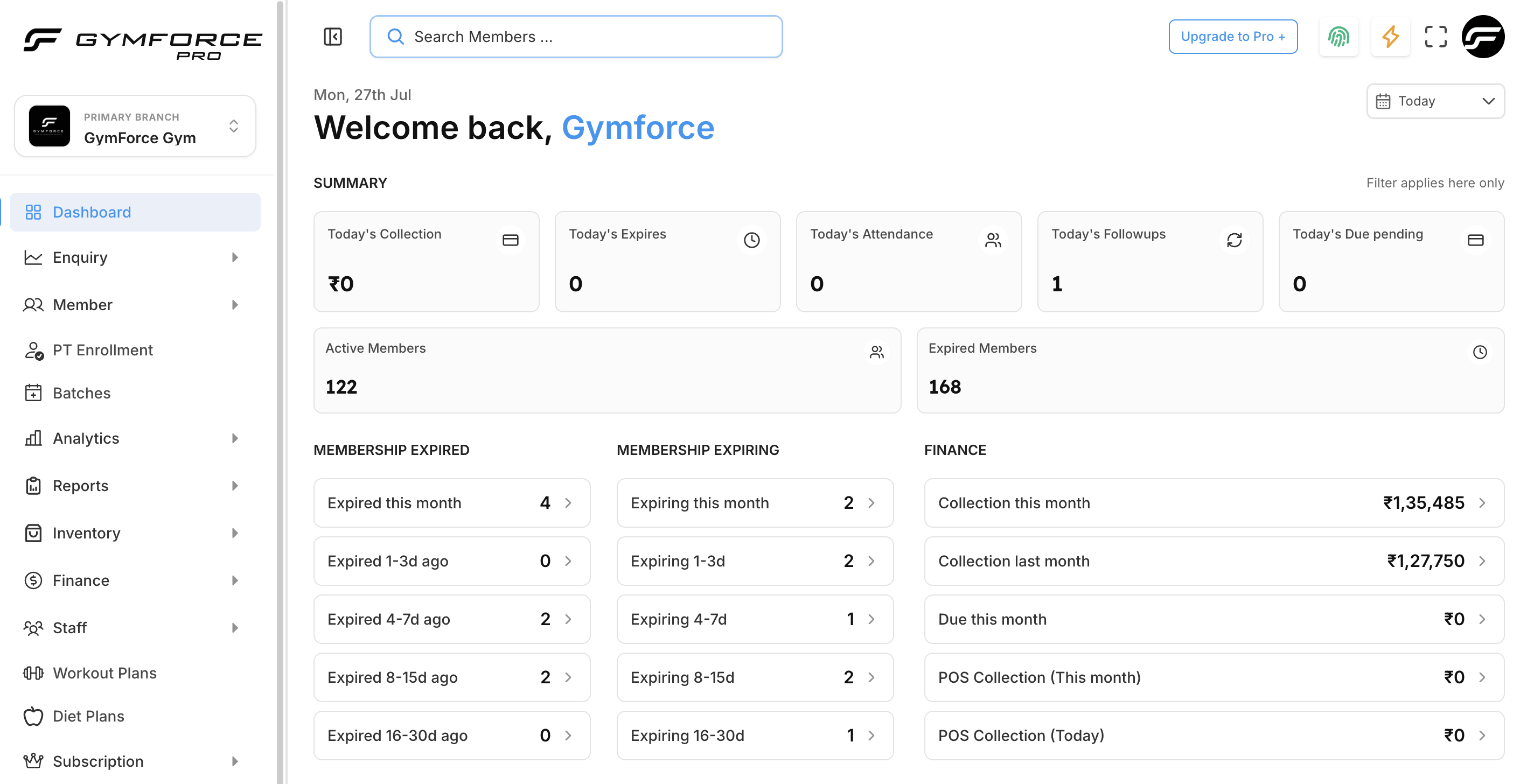
- Both benefit from GymForce's scalable platform - start with essentials, add features as you grow
Hybrid Model: Best of Both Worlds
The most successful fitness entrepreneurs are increasingly adopting hybrid models. A home gym owner might also offer online coaching programs. A commercial gym might launch a home workout app or sell home equipment packages. The hybrid model diversifies revenue and reaches members wherever they prefer to train.
Popular Hybrid Approaches:
- � Home gym + online coaching - serve local clients in-person, global clients online
- � Commercial gym + digital platform - offer in-person and app-based memberships
- � Equipment sales + training - sell home gym setups bundled with coaching packages
- � Gym + content subscription - create workout videos, meal plans, and community access
Related Articles
Choose Your Path, or Combine Both
There is no single right answer in the home gym vs commercial gym debate. Your choice depends on your capital, goals, target market, and risk tolerance. The smartest approach may be to start small and scale - begin with a home gym, build a client base, then transition to a commercial space when the economics justify it. Or launch a commercial gym with a strong online component from day one.
GymForce Supports Both Models
Whether you are running a home gym with 10 clients or a commercial chain with 10,000 members, GymForce has the tools you need. Start with our free plan and upgrade as your business grows.
Start Free TrialSchedule Demo